
"Biologic Chains"
a programming update, and thoughts on genre fiction under surveillance

If I were feeling a bit rascally I would only use this headline to announce my gender:
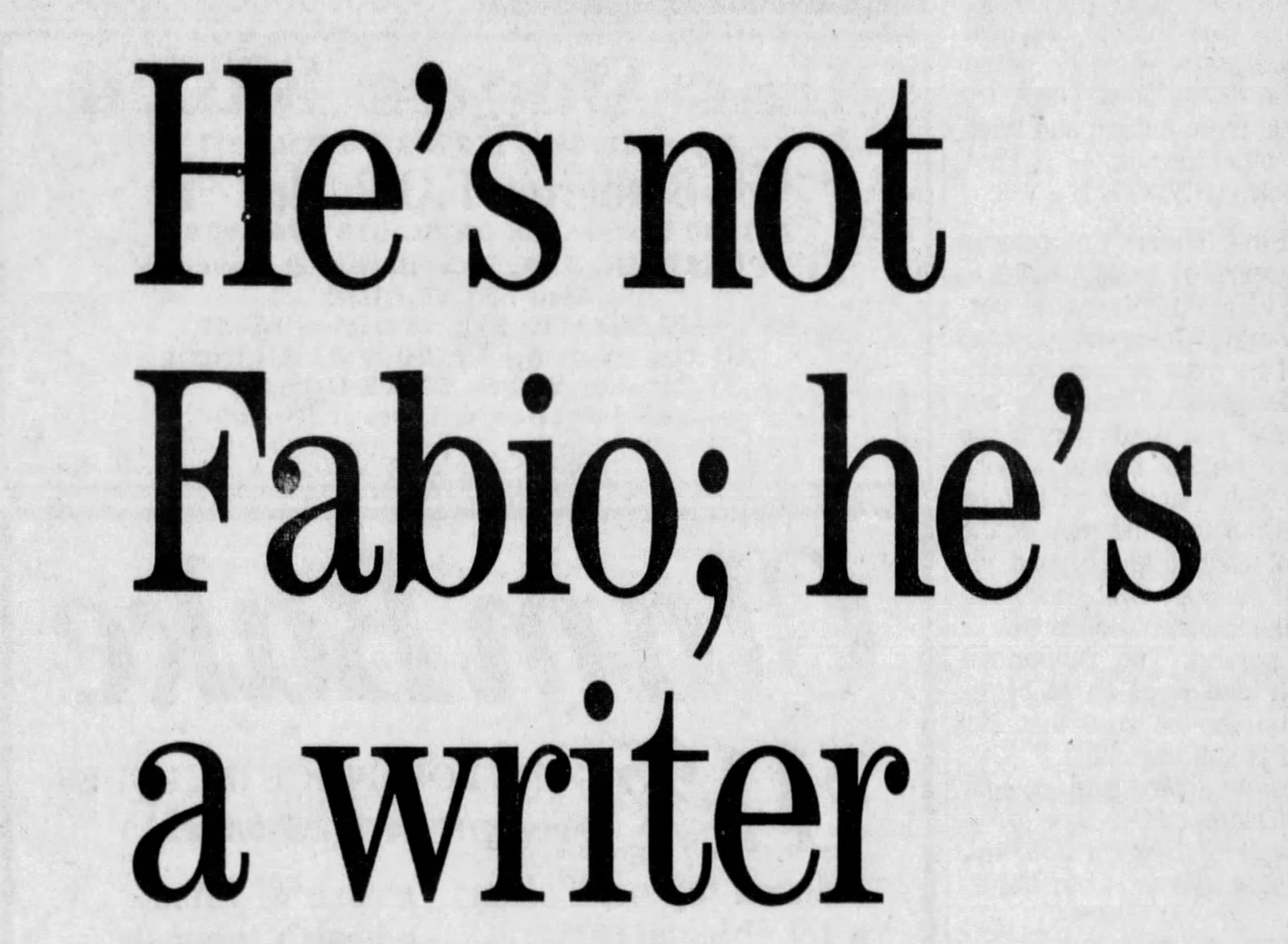
I didn’t want to make a broad announcement, in part because I knew people would congratulate me and that feels a bit strange. But I did begin my medical transition in the year of our lord 2026, in the United Kingdom of all places1, so maybe I should be congratulated. It’s like a running a marathon, but instead of getting shin splits you have a mandated psychology appointment with someone who wants to know if you tried to pee standing up as a child.
But strange things are afoot in the Circle K, and I gotta acknowledge it. Otherwise you’d be wondering why Napoleon is popping off in this bowling alley, or why I’m tag-teaming my newsletter with some guy named Sawyer.
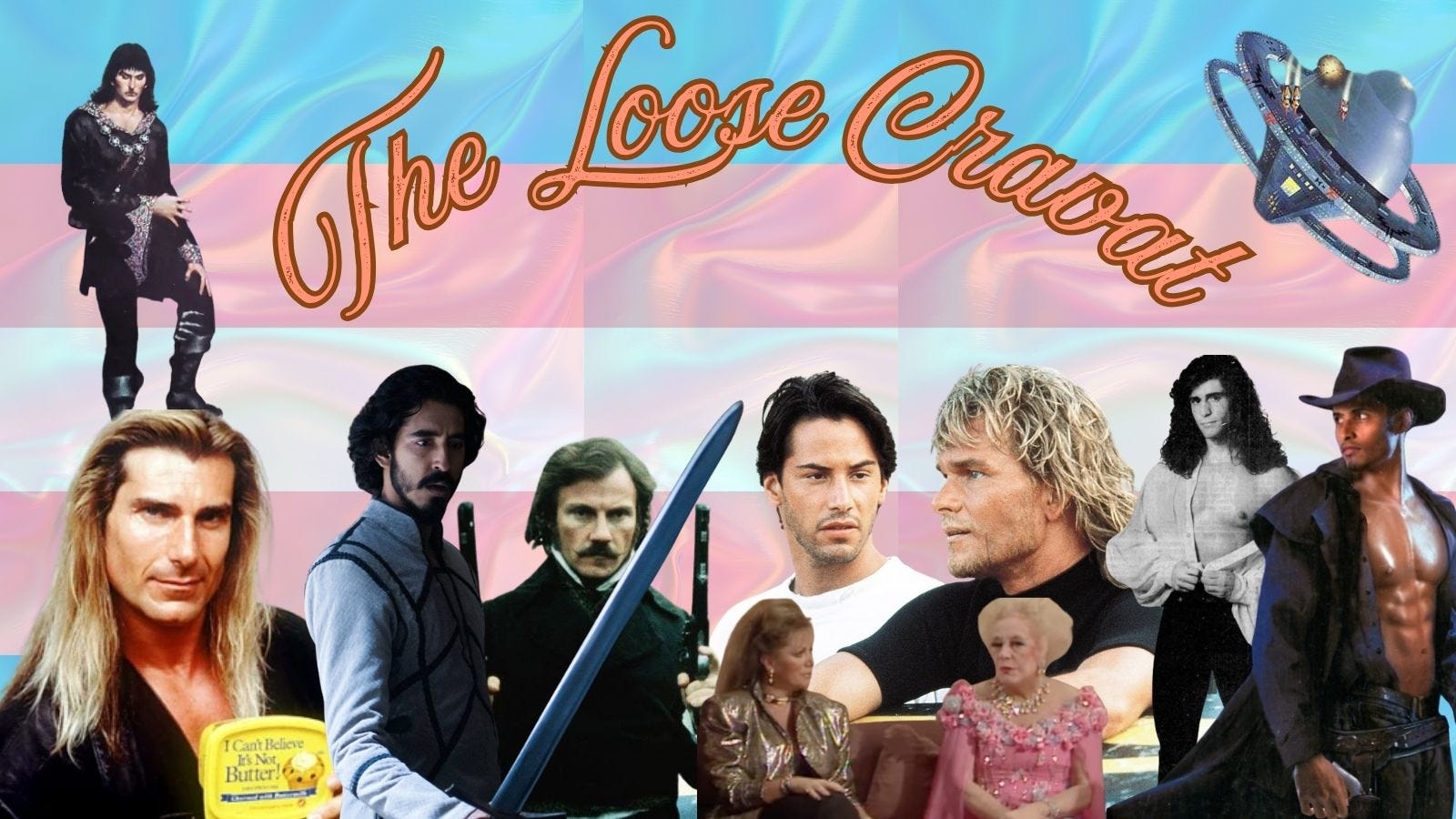
I’m in a phase of my transition where absolutely everything I say about it is bound to embarrass me a few years later.
Here goes: right now I’m tired of questions. I’m learning myself, trying to sort through what habits and desires are purely my own, and what is social conditioning. Am I the type of guy who crosses his legs? Do I wear hats now? Should I get swole? These trivialities cause me no small amount of anxiety. Repetitive inquiry is unbalancing; I want to be surefooted.
One question I remember from the psychologist—Are you trans, or do you just want male privilege?— echoed an idea from JKR’s infamous 2020 essay, where she said, as part of a cautionary tale, that she might have transitioned as a child in hopes of an easier life. After that, I knew there were wrong answers in my required assessment.
Luckily, I could see the path to a gender dysphoria diagnosis the way a “What Sex and the City character are you?” quiz can be gamified to get Samantha. Yes, I played with boy toys. Yes, I peed standing up. Yes, I have been jealous of my brothers. All my answers were true in a way that felt incomplete and therefore, like I was getting away with something by omission.
I looked up Isabel Fall recently, probably seeking out someone who had a much more public inquisition. Her 2020 short story at Clarkesworld, “I Sexually Identify as an Attack Helicopter,” kicked up a storm on Twitter from people who primarily took issue with the title, a play on a transphobic meme. With very little public information about its author—just her name and birth year—how could people know her intent? If ambiguity is too much to sit with, identity markers must fill in the gaps. Quite a few people relished doing so, saying the piece was garbage written by a man. No woman would ever write something so vile.
After the backlash, Fall pulled the piece from Clarkesworld. A year later she told Vox that she couldn’t tear herself away from the criticism. She read all the conjecture that she was a right-wing op, hostile speculation on her gender and sexuality, and accusations that her story had harmed the queer community. Fall checked into inpatient treatment for suicidal ideation, and retired the pen name. She told Vox that “in a war zone, it is not safe to be unknown. Unknown travelers are shot on sight. The fact that Isabel Fall was an unknown led to her death.”
The anger at her story tapered off once people discovered that Fall is a trans woman. Last we heard from her directly, in 2021, Fall had not recovered. “Isabel was somebody I often wanted to be, but not someone I succeeded at being,” she said in the Vox interview. “I think the reaction to the story proves that I can’t be her, or shouldn’t be her, or at least won’t ever be her. Everyone knew I was a fraud, right away.”
I read the Vox piece when it came out, but revisiting it this year felt like peeling a scab. Darkly satisfying to be affirmed in this way. Transitioning made me hopeful, yes, but also so uncertain, and so vigilant. That feeling that I’d gotten away with something had me peering over my shoulder. Who was going to clock me as a phony?
Genre romance fans on the social internet are preoccupied with identity.
It’s clear how we got here. Romantasy is the current punching bag that stands in for the entire genre. It’s sexually regressive, a panacea for the real world, arguments so broad they rely on a mass diagnosis of romance’s readership. This is so nakedly sexist that the old canard “for women, by women” is an understandable (yet inaccurate) rebuttal. So too, is the claim that romance is salutary. If the genre is moral and instructional, that means it cannot possibly be stupid and worthless.
But the expectation that romance should teach is its own form of sexism. Women writers in the genre should be able to get their hands dirty, to create ambiguous and challenging art. As historical author Judy Cuevas (Judith Ivory) wrote in a 1997 letter to All About Romance: “To accept that we carry a moral responsibility to society is to admit we have nothing to give society in terms of art itself. Art is about honesty. It’s about an individual’s expression of her own, unique vision. You don’t tell another adult what she sees. She stands at a different vantage point from you.”
A moral genre is a vigilant genre, and one that puts itself at odds with people on the margins. Critic RS Benedict said on Rite Gud podcast that “harmful” is the new “degenerate.”2 Gretchen Felker-Martin, writing about Isabel Fall’s critics, approximates a similar diagnosis: “Each analysis positioned the author as at best thoughtless and at worst hateful, while her attackers are cast as righteous; in such a way of thinking, art is not a sensual or aesthetic experience but a strictly moral one, its every instance either fundamentally good or evil. This provides aggrieved parties an opportunity to feel righteousness in attacking transgressive art, positioning themselves as protectors of imagined innocents or of ideals under attack.”
Some of Fall’s critics say she should have had an artist’s statement with her story, or a disclaimer that she is trans so people would know how to interpret her work. Neil Clarke, reflecting on the story, acknowledged this as a legitimate argument.3 “I would never have pressured Isabel to out herself as trans in her bio, but it’s clear, given the way that information shifted the discussion, that would have helped some readers be a bit more trusting of Isabel, the venue, the story, and what she was hoping to accomplish with it. Should the work ever be restored, additional information will be included along with the story to help properly warn and inform the reader about potential issues.” She shouldn’t have to out herself as trans, but in the interest of helping “some readers be a bit more trusting,” it’s a good thing if she does. The burden is on her to explain herself, not on readers to sit with discomfort.
I do think that part of the reason authorial identity is so sought-after is that readers want to affirm their taste as ethical.4 If an author’s name is the only thing available to you, you cannot use your perception of their identity to buttress or malign their work.
Back when Heated Rivalry was omnipresent in the culture, someone on TikTok instigated a deep dive into Rachel Reid’s interviews to prove that she is not actually bisexual. (She is.) By attempting to unlink Reid from the queer community, this reader was giving their audience permission to view her work with suspicion.5 They could have used the time they spent poring through interviews to build a critical case for their distaste instead, but that would have required using their noggin.
This is what happens when we decide we need a morally pure literary landscape: appraisal of art on its own merits takes a backseat to being a fucking cop.
The paranoia I mentioned earlier virtually goes away when I’m with other trans people. Isn’t that something? I was making myself so sick on social media worrying about censorial scolds and bad faith actors that I wasn’t letting myself live. I had to LOG OFF and t o u c h g r a s s.
I recently read Camille Paglia’s 1990 book, Sexual Personae, for a Reformed Rakes episode on Johanna Lindsey’s Warrior’s Woman. Paglia is an infamous edgelord and bioessentialist troll, but this one line from her book keeps rolling around in my head like a loose marble: “There is no escape from the biologic chains that bind us.”
How dire! How Doomsday! It reads like a proclamation from an Evil Wizard. A statement so overblown with cruelty that I circled around to finding it funny.
Nearly every trend piece about romance starts with the baseline assumption that the reader self-inserts as the heroine as a mode of escapism. This is myopic— it’s not how most women I know read, and it’s certainly not true for me, who came to the romance fandom through my fascination with the male cover models of the 1990s. I should note there is some overlap between my other interests: wrestling and bodybuilding.6 I find these muscle guys very interesting, out of prurience, affection for camp, and in a more general aesthetic pleasure in their art forms. In The Encyclopedia of Modern Bodybuilding, Schwarzenegger compares his profession to a sculptor’s.
This mismatch between my presumed interest and where it actually lay helped crack the egg, so to speak. May we all break free from our biologic chains. I believe that art, especially at its most uncomfortable and transgressive, can be the key.
Happy Pride to the queer weirdos, freaks, and perverts in my readership. Happy Pride to my trans community. I love you all very much and think you’re super hot and cool.
-Sawyer
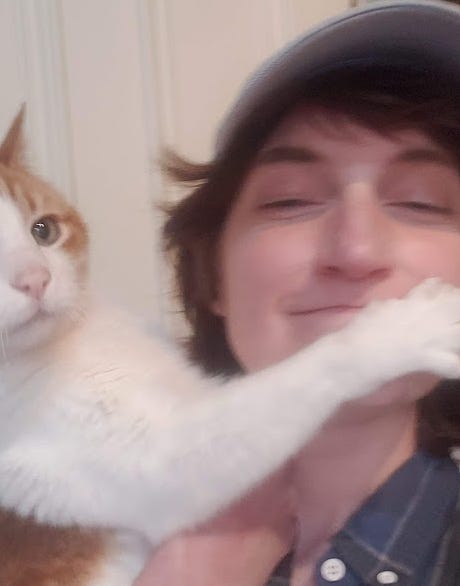
LOOSE CRAVAT UPDATE!!! VERY IMPORTANT.
I have turned on the paid subscription tier! If you’d like to financially support my work, you can now do so. (Because I’m outing myself in this piece I must ask that you only upgrade to paid to support my writing, not as a form of activism. For activism, look up trans organizations/mutual aid in your area to see how you can help.)
I will paywall some of my older work to free them from the Substack algorithm. I also have plans for some subscriber-only pieces (including an incredibly longwinded essay I wrote about romance and gay marriage last year) that I would like to limit to a smaller audience. Subscriber pieces may be as sporadic as my regular essays. I like to take my time.
For the rest of you, I’m going long on some old-school romance novels soon. I was surprised to discover I haven’t done this since 2023 with Whitney, My Love and Stormfire.


A return to form, baby!!!!!!
TERF ISLAND, ever heard of it?
Also, in case anyone was keeping tabs, I’ve identified as non-binary since 2021. Moving back to the binary as a trans man, and asking the world to view me as the same, feels like such a radical shift for me personally that the word transition feels appropriate.
I’m not a transmedicalist. I don’t believe surgery or hormones are necessary to transition, and I believe non-binary people fall under the trans umbrella. I write about my medical transition because it’s relevant to my experience.
I understand that this may seem like a jarring statement, but sit with it for a moment. It is a deeply conservative impulse to demand that art toe a certain moral line. Most left-leaning people who do this argue that they would never advocate for censorship. But then what is the end goal, exactly? To whip everyone up into a righteous fury, only for it to fizzle out? Please. What happened to Fall (story pulled, author isolated and rebuked from community) is exactly what her harshest critics wanted to happen. That some joined the chorus crying harm without seeing this inevitability does not absolve them of their actions.
Per Lee Mandelo: “Art does not exist to be evaluated on a scale of “harm” to “uplift,” and if we want to talk dog-whistles, that right there is a huge one: it’s deeply anti-intellectual, and it centers a form of toxic individualism that evacuates solidarity/difference in favor of moral purity.
I am glad that Clarke stuck up for Fall, and took the time to address some of the accusations against her and the magazine point by point. But I disagree with a few of his conclusions. He also says that because Fall pulled the story for her own health and wellbeing, “this is not censorship.”
She wasn’t censored by the magazine. An online mob railing against an author until they want to die, causing them to pull the story themselves to fend off further attack, is a form of censorship.
I could go on here about how many people I’ve seen call Reid a “straight woman” to discredit her. In my experience, the only way queer women can avoid this mislabeling is to get a carabiner, which is not easy to display in an author’s photo.
In truth, I think her womanhood is what ails them. There’s a prevalent idea on social media that women (of all sexualities) writing gay men characters is dehumanizing to gay men in real life and therefore, harmful. But to elaborate further would be engaging in MM discourse, and I’d frankly rather stick my hand in that pain box from Dune.
(Instead, let me direct you to a (very funny, very wise) roundtable Daniel Lavery hosted on the subject.)
On the flip side, John Waters has spoken before about receiving criticism for writing lesbian characters. The male gaze accusations volleyed against The Handmaiden seem to be based entirely on the belief that Park Chan-wook, as a man, is doing something perverse by depicting lesbian eroticism in his adaptation of a lesbian novel.
Blah blah blah isn’t this so boring? Judge art by its own merits! Say something true and beautiful.
I know what you are doing! Stop zooming in on pictures of my arms. I mean AS A SPECTATOR.
Glad your turned on paid, I always say if I consume your free content for free, I’ll consume your paid contact for paid!
This is sooo good